
Ministries
Resources
Eric B. Watkins
New Horizons: March 2026
Also in this issue
by OP Church Planters and Evangelists
by Jeremiah W. Montgomery
Historically speaking, there are three models of church planting that have been practiced in the OPC. The first, and arguably most common, is the mother-daughter model. This happens when an established congregation plants a daughter congregation on the other side of the city or in a nearby area from which people drive to the mother church. Planting a daughter congregation can help address the need for more room as a church grows or help those commuting a long distance to have a shorter drive, enabling a stronger sense of community and outreach. This model of church planting is the most familiar, is likely the most promising—as it is the safest—and is widely practiced in the OPC and among like-minded denominations as well.
The second model could be referred to as the “core group” or presbytery model. This is when a group of believers contacts a presbytery’s home missions committee, requesting to become a mission work of the OPC. The members of this group may or may not already be part of the OPC, but have begun to meet for Bible studies and possibly even worship. When these groups come to and are approved by the presbytery, the presbytery then helps them with the first steps of church planting and assists them with finding a church planter (often called the “organizing pastor”) when the group is ready. This paradigm of church planting became especially prevalent in the ’80s and ’90s in the OPC when groups were leaving other denominations in search of a new home.
The last model, which may be called “parachute church planting,” is the most challenging but has a meaningful history in the OPC. What exactly is parachute church planting? This paradigm is distinguishable from the first two in one main way. Unlike having a daughter congregation or a core group come to the presbytery asking for help, a parachute church plant begins not with a group but with an individual. Parachute church planting is sending an evangelist to a new area with the prayerful desire that he will focus on evangelism and eventually gather a group of people together that will become a church plant and eventually an organized congregation. Before arguing for this model, we should consider some of the challenges to parachute planting.
The first challenge is the most obvious: finances. Sending an evangelist to parachute plant is like sending a missionary. Either he will need to be bi-vocational, or he will need to be supported externally in one fashion or another until a group is formed that can help carry the costs of the work. Second, there understandably may not be many men who feel gifted and called to such a work. There is much more safety in working with an established work than attempting to rake the concrete, hoping that something will grow. It is tempting to think of church planting primarily as responding to the Macedonian call to “Come over and help us.” There are currently many vacant pulpits and groups looking for pastors—so why send a man to an area where there’s not already a gathered group? Last of all—but very importantly—it takes healthy churches to plant healthy churches. Presbyteries with smaller, struggling congregations may lack the financial and oversight resources needed to do parachute church planting well. Bottom line: parachute planting is risky and expensive. So why should we do it?
There are at least three reasons why we ought to desire to see more parachute church plants around the OPC—and why it would be healthy for us.
First, parachute planting is biblical. In Acts 13, the Holy Spirit set Paul and Barnabas apart for something like parachute church planting. The church in Antioch prayed and fasted and then sent Paul and Barnabas off to evangelize and establish new churches in Seleucia, Cyprus, and Salamis. This dynamic—the church sending evangelists to new cities—is seen throughout the book of Acts and is the foundation of most of the churches that we come to know in the New Testament. In a manner of speaking, most of the churches in the New Testament were parachute plants at some point. Evangelists often came first, and then came pastors who would stay, preach, and shepherd the flock after the evangelist moved on. Sometimes churches were established in reaction to a “Macedonian call,” but many churches were planted through men being sent as parachute planters.
The second reason we should desire more parachute church planting is that it is very much a part of our historical identity. Many churches in the OPC around the country were successfully planted by this model. From coast to coast, stories could be told of men in the OPC who were called by presbyteries to do evangelism in an area. Eventually, where these efforts succeeded, a group would be gathered into a Bible study; that Bible study would turn into a church; and a pastor would be called to shepherd the flock after the evangelist moved on to try to start another church in another location. Sometimes, of course, the evangelist would stay with the church and become its pastor. The model being described here is in many ways the origin of the regional home missionary position. That position eventually flexed, especially in the decades that saw many established groups coming to presbytery home missions committees for help finding pastors and becoming organized congregations. The simple point here is that parachute planting is very much a part of our cherished history and identity in the OPC, alongside other models of church planting. We plant daughter churches; we work with groups that come to us; and we sometimes send evangelists to new areas where groups do not already exist.
The last reason offered is a very practical one. Parachute church planting focuses heavily upon evangelism. The OPC was founded upon a desire to see people reached for Christ on the foreign mission field and to see the church remain faithful to confessional orthodoxy. Parachute church planting seeks to do both, in that order. It focuses on evangelism—but always with the goal of establishing new churches that are Reformed, confessional, and committed to the means of grace. The reality is that much of our numeric growth in the OPC is really transfer growth from other churches or denominations. That is not wrong in and of itself, but we should desire to see people won to Christ through our churches and church plants. We should long for more adult baptisms and for the privilege of being the first to disciple new believers as we proclaim the gospel and establish new churches.
Parachute church planting should never be exalted over other faithful models of church planting in the OPC, but it should exist fruitfully alongside them. As we engage in the work of parachute church planting together, we also get to share in the joy of seeing God’s Spirit at work among us. These stories can invigorate us and help create a culture of evangelistic health in our churches. In short, parachute planting can be a blessing to the whole church. It is biblical, it is consistent with our history and identity, and our God is glorified as we fervently proclaim the gospel in new places.
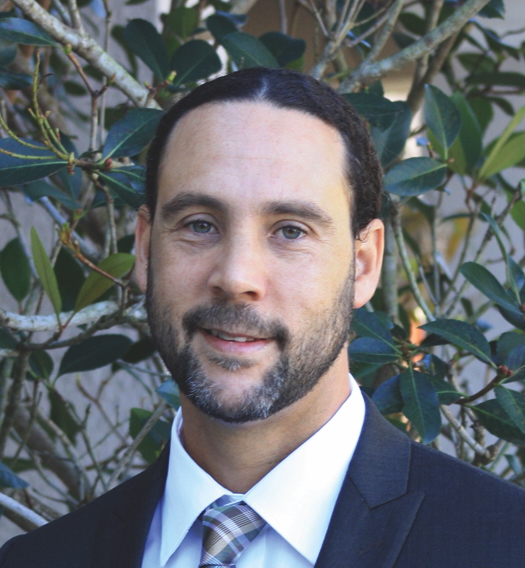
The author is planting Salt and Light Reformed Church in Daytona Beach, Florida, and directs the Center for Evangelism at Mid-America Reformed Seminary. New Horizons, March 2026.
New Horizons: March 2026
Also in this issue
by OP Church Planters and Evangelists
by Jeremiah W. Montgomery
© 2026 The Orthodox Presbyterian Church


