
Ministries
Resources
Danny E. Olinger
New Horizons: August 2026
Also in this issue
A Panoramic View: The Ninety-Second General Assembly
by Ken B. Montgomery
Some Reflections on Kreeft’s Autobiography
by Richard B. Gaffin Jr.
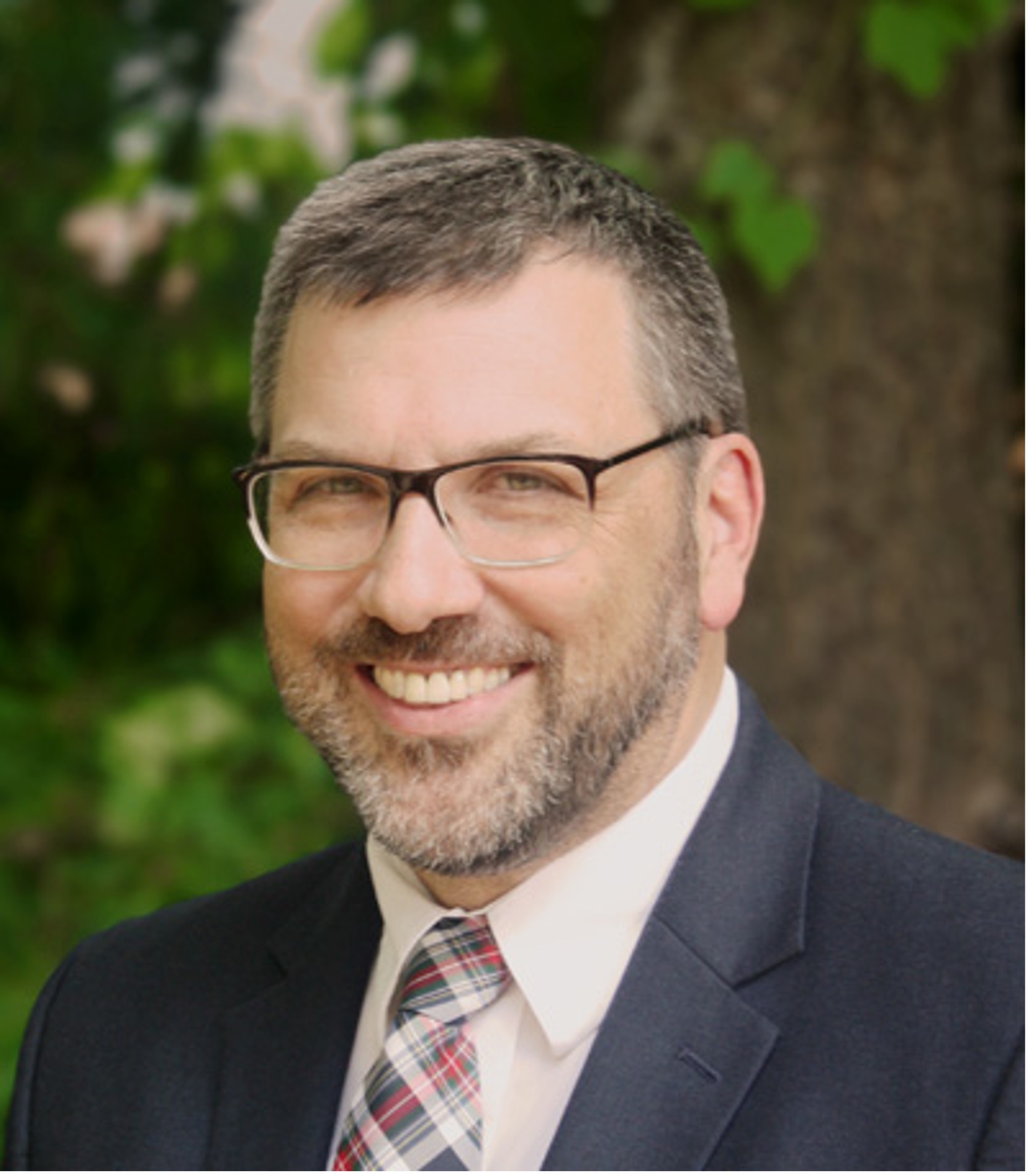
On June 25–27 over 220 deacons, deacons-in-training, ruling elders, and ministers participated in the fifth OPC National Diaconal Summit sponsored by the Committee on Diaconal Ministries (CDM) and held in Wheaton, Illinois. Those gathered were from the seventeen presbyteries of the OPC, the Presbytery of Southern California leading the way with thirty-six men from thirteen different congregations. Covenant OPC in Orland Park, Illinois, sent the most men (deacons Hal Hamstra, David Pontier, John Stob, Steve Voss; deacons-in-training Ryan Keane, Deddy Nababan, Jensen Sorensen) from a single congregation. Some deacons such as Geno Altiery (Bayview in Chula Vista, California) and John Stahl (Emmanuel in Wilmington, Delaware) had participated in all four previous summits; other deacons newly ordained such as Joshua Tracey (Lakeview in Rockport, Maine) and Thomas Kinney (Grace in Sewickley, Pennsylvania) were attending their first summit. But in the midst of such wonderful variety a shared theme permeated the gathering, namely, showing the mercy of Christ to those in need.
This tone was set in the opening plenary session when deacon Bob Keys, a retired member of the CDM, proclaimed that the diaconate is not simply getting things done, but helping the church become shaped by the mercy of Jesus.
Keys shared a powerful example of such mercy in action. When Hurricane Katrina struck the region surrounding the Gulf of Mexico on August 29, 2005, Keys worked with ruling elder David Haney (Faith in Pole Tavern, New Jersey) to see what could be done by the OPC in disaster relief. An eighteen-year-old member of Grace Presbyterian in Columbus, Ohio, volunteered to go with Keys to Louisiana to assess the situation, help with the clean-up, and share the gospel with those who had suffered great loss. That young man was Peter Stafford, the missionary doctor in Africa, who, in a much-publicized incident, contracted Ebola this past May when serving the afflicted in the Democratic Republic of Congo. Keys’s message was clear: Christ by his Spirit makes us a different-hearted people and provides us with the opportunity to engage others with Christ-centered, gospel-shaped mercy that changes lives.
Following Keys’s address, many men assembled around firepits located on the campus for fellowship. This warm fellowship is a priority at every summit. In a personal way, deacons meet other deacons. The talking, laughing, and even comforting lasts into the night as the brothers share both the blessings and challenges of diaconal work in their local settings. One of the fun ways that the CDM encouraged men to strike up conversations with those whom they had never met before was to find out which person at the summit had visited all fifty states. On the last day, CDM Administrator David Nakhla revealed that the answer was Stephen Larson, pastor of Concho Valley Church in Concho Valley, Arizona.
The second day of the summit opened with Committee on Christian Education General Secretary Danny Olinger speaking on OPC diaconal ministry through the decades. Olinger highlighted the roots of the CDM ministries both past and present, including ministry to those in need internationally in Korea, Japan, the Netherlands, Eritrea, and Uganda; ministry to those affected by flooding in 1937 in Newport, Kentucky; ministry to Jewish refugees at the start of World War II by Rev. David Freeman; and ministry through short-term missions from the mid-1980s into the twenty-first century led by Rev. Dave Crum in Baja, Mexico.
The summit-goers then separated into three breakout sessions. Stephen Tracey, pastor of Lakeview in Rockport, Maine, spoke on deacons helping to provide respite for families affected by disability in the local congregation. Matt Butler, ruling elder at Redeemer Church in Winter Garden, Florida, addressed safety concerns in the church. Eric Watkins, evangelist of the Presbytery of the South, addressed diaconal evangelism.
CDM member Chris Cashen was then joined by deacons Alexander Patocs (Providence in Scottsdale, Arizona), Len Richards (New Life in Williamsport, Pennsylvania), and Rich Duggan (New Hope in Bridgeton, New Jersey) to discuss “The Heart of a Deacon.” The men sought to answer such questions as: How does a deacon deal in his heart with a lack of faith? What is a biblical response to a situation where the mercy given is not well received? How is a deacon’s heart encouraged? In each scenario, the panelists came back to the abundant mercy and forgiveness found in Jesus.
A second round of workshops followed with Mark Winder, pastor of Wolf River in Collierville, Tennessee, speaking on the essential ministry of service; Brian De Jong, pastor of Grace in Sheboygan, Wisconsin, talking about caring for the elderly; and retired pastor Gordon Cook and Logan Murray, ruling elder at Living Hope Presbyterian in Brunswick, Maine, bringing those gathered to tears of compassion with their presentation on ministry to the sick.
The full day of talks and workshops closed with Mike Schout, pastor of Grace Fellowship in Zeeland, Michigan, giving a heartfelt address on why healthy churches need “limping deacons.” According to Schout, limping deacons are those who are honest about their brokenness before the Lord. Such a disposition of humility builds up trust in the congregation and creates a culture that strengthens the body of Christ. Schout further declared that churches should be intentional in developing men to be those who limp. He advocated instituting a diaconal internship program, which in his view has been a “game-changer” at Grace Fellowship. An internship is not a guarantee that a man will be ordained as a deacon, but allows the church to see a man’s character and humility in ways that a congregation would not be able to do otherwise. He closed the talk with this pointed take-away to those gathered: Maybe your limp is what qualifies you to be a great deacon, for when you are weak, Christ’s power is made perfect in you to help others.
The summit’s last day began with three more workshops. Tim Hopper, previous CDM member, spoke about fitting service into a busy life; Jim Berry, ruling elder at Reformation in Morgantown, West Virginia, discussed the mental processes of those suffering from addiction and how to help such individuals, and Lowell Ivey, director of prison ministries for the Presbyterian Church in America, talked about ministry to the incarcerated. CDM member Joe Troutman then delivered a devotional about man made in God’s image, that image maimed, and the image restored through the work of Christ. Pointedly he told those gathered, “You can’t save anyone; only Jesus can.”
In his closing remarks, Nakhla thanked CDM members and staffers, especially Trish Duggan (New Hope, Bridgeton, New Jersey) and Rachel Kinney (Grace, Sewickley, Pennsylvania), for their tireless work before and during the three days of the summit. He also thanked Zach Meadows, deacon at Bethel in Wheaton, Illinois, and Meadows’s team of drivers in bringing the men to and from O’Hare and Midway airports. Before the closing prayer, Nakhla asked for a show of hands of those who had been blessed by the summit, and then how many would be willing to recruit their fellow deacons to attend the next summit in four years. Nearly every hand in the room was raised.
The author is editor of New Horizons. New Horizons, August 2026.
New Horizons: August 2026
Also in this issue
A Panoramic View: The Ninety-Second General Assembly
by Ken B. Montgomery
Some Reflections on Kreeft’s Autobiography
by Richard B. Gaffin Jr.
© 2026 The Orthodox Presbyterian Church


