
Ministries
Resources
Ken B. Montgomery
New Horizons: August 2026
Also in this issue
by Danny E. Olinger
Some Reflections on Kreeft’s Autobiography
by Richard B. Gaffin Jr.
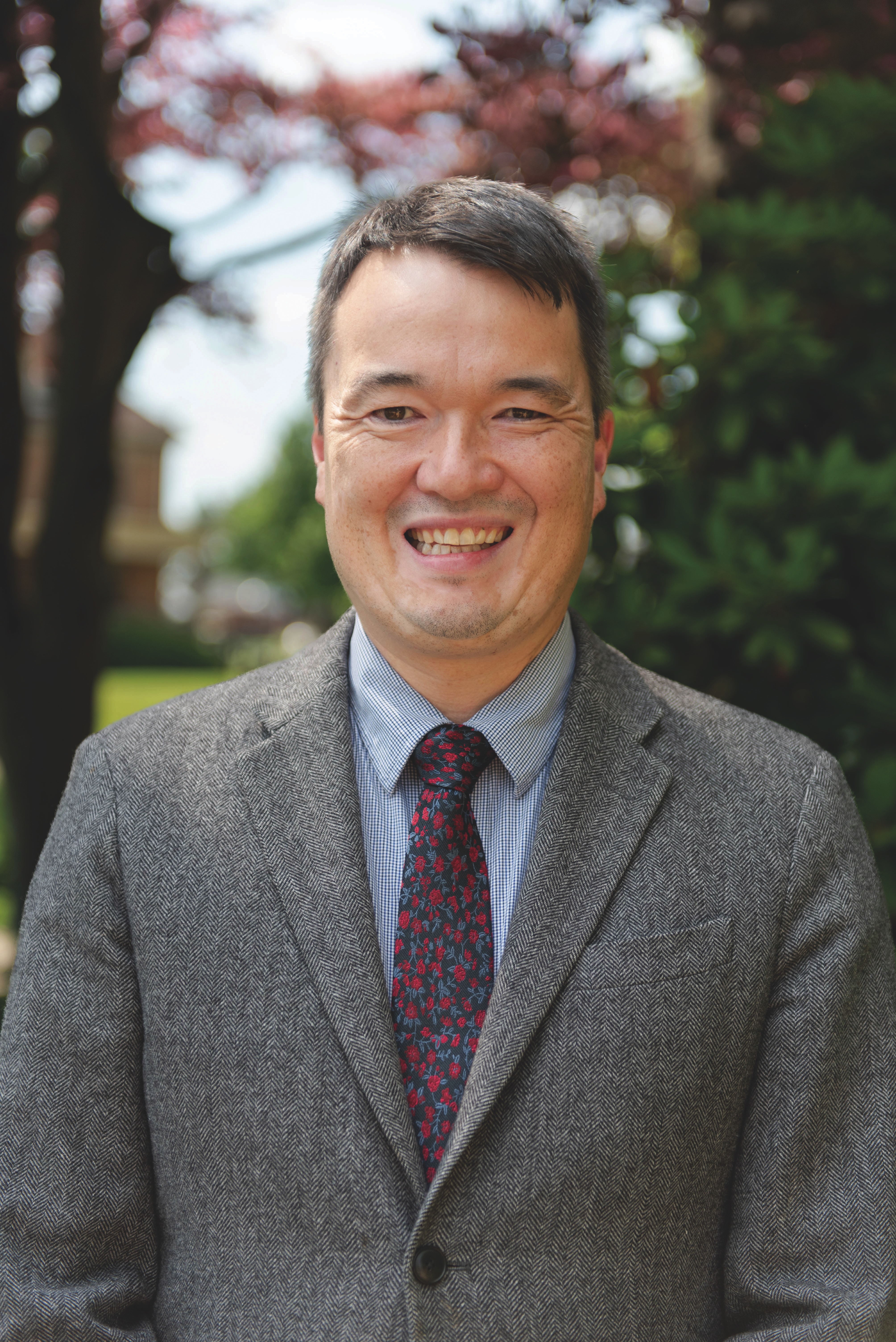
Many well-paved mountain roads have pull-over vista points for drivers to park, pause, and take in the scenery of surrounding peaks and valleys. The Orthodox Presbyterian Church’s annual general assembly is like a vista point—it’s a time to enjoy a prolonged look at the big picture of the life of the whole denomination. What is in view is even more lovely than soaring summits and pristine rivers: The under-shepherds at general assembly are overseeing and appreciating God’s work within those who are on the pilgrimage to the heavenly Zion. “As for the saints in the land, they are the excellent ones, in whom is all my delight” (Ps. 16:3).
The Ninety-Second General Assembly met at Geneva College in Beaver Falls, Pennsylvania, from June 3–9. It is fitting for Orthodox Presbyterians to meet at a place called “Geneva,” because in the sixteenth century this was the city in Switzerland where the form of present-day Presbyterianism began to take shape, the lakeside republic in which the three pillars of Reformed doctrine, worship, and church government were honed.
The opening worship service of the assembly was led by outgoing moderator Rev. Brian L. De Jong, who preached from Luke 17:7–10 on the importance for officers in the church to count themselves as but “unworthy servants.” Those who have a due reverence for the Master, who are at the beck and call of the King, are content simply with carrying out the will of the Lord. In obeying him, we have only done our duty, but one of the marvels of life in the kingdom is that the Lord is pleased by his grace to invite his servants to sup with him. God in Christ makes us to “sit with princes, with the princes of his people” (Ps. 113:8). The message set the tone for the assembly, as the fathers and brothers were duly reminded to speak as fellow humble servants, one to another.
Rev. Everett A. Henes (pastor of Hillsdale OPC in Hillsdale, Michigan) was elected moderator. The Hebrew word zakein, which is customarily rendered as elder, originally meant “the bearded one,” and the moderator this year certainly met this qualification. Mr. Henes served with aplomb, injecting moments of levity at seasonable times but conducting himself with due solemnity and prudence, given the gravitas of the matters before the assembly.
Each general assembly follows the same basic path and protocols, as found in the OPC’s Book of Church Order, the Standing Rules and Instruments, and Robert’s Rules of Order. Visitors are often struck by the formality of the proceedings. But the procedures ensure that only one commissioner speaks at a time, and that each side of a question (that is, topic) is given room to be fairly represented. Ours is known as a deliberative assembly, meaning that determinations are not made ahead of time, but only after deliberation from the representatives sent by the seventeen presbyteries of the OPC. Though there might be strong disagreement on certain issues, there is overall a tone of mutual respect, as the commissioners understand the purpose of the meeting is to uphold the standards of the church while seeking to advance the “peace, purity, and unity” of the body.
One of the highlights of the assembly is hearing from fraternal delegates. These are representatives from like-minded, Reformed, sister churches in our nation and other parts of the world. Along with bringing the commissioners up to speed on the life of their churches, the brothers from other communions shared their warm affection for the work and witness of the OPC. Several testified regarding acute challenges in countries where secular authorities are instituting laws that target pastoral counsel and proclamation from the Scriptures. Prayer, wisdom, and courage is needed for those churches.
The Committee on Home Missions and Church Extension (CHMCE) rejoices that almost 15 percent of OP congregations meeting for worship on the Lord’s Day are church plants (the OPC had 297 established congregations and 43 church plants at the end of 2025). Recent visitors to a fledgling congregation were struck by the simple act of the church members singing together in worship. The Word overflowing through the choir of the saints “making melody to the Lord” (Eph 5:19) is itself a testimony to the unifying power of the gospel in a splintered society. Regional home missionaries continue to have a front row seat to the Spirit’s work in multiplying the fruit of gospel proclamation. Church planters in the OPC benefit greatly from the training provided by CHMCE and are thankful for the regular prayers of the saints on their behalf. The prayer of the committee is that the OPC “would grow as fruitful in reaching the lost as we are in welcoming the found.”
In the report from the Committee on Foreign Missions (CFM), the inextricable connection between sacrifice and fruitfulness in the work of gospel growth was highlighted. Two missionaries testified to the hardship and the joys of laboring in planting and watering gospel seed, showing how at every turn all who spend themselves for the name of Christ must do so with a keen sense of dependence upon the strength of the Lord. Alarmingly, as the CFM reported, there were zero applicants for full-time foreign missions service received in the past year. The CFM was thankful to report that financial giving to the committee has been very generous, and there is an eagerness to use these funds to send those whom the church may call in the near future, servants who follow the Isaianic footsteps: “Here I am! Send me!” (Isa. 6:8).
Both CHMCE and CFM brought to the attention of the assembly the significant shortage in ordained ministers to serve at home and abroad. The assembly approved the calling of our churches to a season of prayer and fasting beginning the week of September 13, seeking for the Lord of the harvest to raise up laborers for the fields.
The Committee on Christian Education (CCE) reported on the continued effectiveness of the Timothy Conference, which has assisted many young men in the OPC as they consider the work of gospel ministry. Mr. John Dunahoo from Great Commissions Publications reported on the longstanding and profitable partnership of the OPC and PCA in the work of providing Christ-centered Sunday school materials. General Secretary Danny Olinger conveyed the value of the intern program in helping candidates gain experience under seasoned ministers and sessions before launching into ordained ministry.
The retirements of Dr. James S. Gidley (thirty-six years of service on the CCE) and Rev. Douglas B. Clawson (twenty-four on the CFM) were recognized with a standing ovation and a resolution of thanks, respectively.
The work of the Committee on Diaconal Ministries (CDM) shows continued growth in diaconal partnership and coordinated labor at the local, presbytery, and denominational levels. The CDM is working to provide resources in the area of training prospective deacons. Mr. David Nakhla, CDM administrator, reported on a recent visit to Ukraine, where he and a small team from the OPC met with representatives of the Evangelical Presbyterian Church of Ukraine to see how funds from relief contributions are being used to assist those in the church and their neighbors during the last four years of war. Mr. Nakhla also conveyed the benefits of Short Term Missions teams in the States and abroad: Both the team members and the missionaries on the field are encouraged by working together.
The Committee on Ministerial Care (CMC) seeks to support the full-orbed care of ministers and their families. In addition to helping with pastoral sabbaticals and retreats, the CMC oversees the Obadiah Fund, which makes an annual disbursement to assist retired ministers and their widows. The CMC is also hosting Refresh 2026, a retreat for ministers and their wives in Atlanta, Georgia, at the end of September, the first of its kind for the OPC.
In the evening, the commissioners gathered for worship on the campus of Geneva College, overseen by Grace OPC in Sewickley. Pastor Jeremy Jones (Covenant OPC in Grove City, Pennsylvania) preached from Mark 10:35–45, reminding us that vainglory and self-aggrandizement have no place in Christ’s kingdom. Rather, greatness in the church is patterned after Christ himself: We are to be “servants of all.” The terms of our ministry (Greek: diakonos) are dictated not by the whims of those we serve, but instead by the law of love revealed in Scripture.
Presbyteries (lower judicatories) may send a formal communication to general assembly requesting the assembly to consider taking particular actions. These are called “overtures.” This year, one overture requested the formation of a special committee to study church and state relations, with attention given to Christian Nationalism. This overture was granted, and Messrs. Darryl Hart, David Innes, Alan Strange, Lane Tipton, and David VanDrunen were elected to serve on the committee, with Messrs. Zachary Lautenschlager and David Noe as alternates.
Under the Roman emperor Constantine (300s A.D.), the church and state had more or less entered into a partnership; the sword-bearer (the civil magistrate) and the stewards of the kingdom keys (church ministers and elders) sought to coordinate their efforts in the beginning of what is known as Christendom. This Constantinian arrangement of a sacral conception of the state in a Christian framework lasted at least to the end of the Thirty Years’ War (1648), and arguably persists in, for example, Great Britain, where certain churches receive special recognition from the state. Questions regarding whether the civil authority ought to operate upon a particular religious/confessional basis, as well as the implications of the 1788 American revision to WCF chapter 23, and a bevy of others, continue to invite careful consideration.
Another overture related to the church’s response to what is known as Kinism and Race Realism was considered, and the following was adopted:
That the 92nd General Assembly join with our sister churches from the North American Presbyterian and Reformed Council, our brothers in the Associate Reformed Presbyterian Church, the Reformed Presbyterian Church in North America, and the Presbyterian Church in America in their public commitment to condemn without distinction any theological or political teaching which posits a superiority of race or ethnic identity born of immutable human characteristics and . . . call to repentance any who would promote or associate themselves with such teaching, either by commission or omission.
The assembly also granted the formation of a special committee to “study all forms of racial prejudice and related matters and report to the Ninety-Third General Assembly.” The Moderator appointed Messrs. Daniel Cooke, David Graves, Zachary Keele, Filipe Schulz dos Santos, and Eric Watkins to the committee, and Messrs. Michael Myers and Z. Bulut Yasar to serve as alternates.
In the pilgrim journey of the church, we recognize that we are still sojourners on the way and not yet those who have been transferred to the rolls of the church triumphant in Zion. One of the features of life in the wilderness setting is the need to deal in a godly manner with sin or disorderly actions within the body of Christ. There is an inevitable sort of messiness that must be acknowledged in this vale of tears (Ps. 84:6)—including in the church, where we must “bear one another’s burdens” (Gal. 6:2), individually and corporately. I find great encouragement for such presbyterian labor of love in Proverbs 14:4: “Where there are no oxen, the manger is clean, but abundant crops come by the strength of the ox.”
Much of the assembly’s time was spent working through appeals and complaints. What are appeals and complaints? The Book of Discipline 7.1 states, “An appeal in a judicial case is the removal of the case to an appellate judicatory by the filing of a petition asking that the final judgment of a lower judicatory be reversed or modified.” Then in chapter 9: “A complaint is a written representation, other than an appeal or a protest, charging a judicatory with delinquency or error.”
Recognizing that judgment in these matters carries significant ramifications, the assembly takes care not to rush to conclusions. At the outset, appellants and representatives from each judicatory are invited to meet with an assigned advisory committee. These advisory committees read the pertinent background material and then hear from and ask questions of each party in the specific cases. There are two sides to every pancake, as the saying goes, which is a colloquial way to frame Proverbs 18:17: “The one who states his case first seems right, until the other comes and examines him.” A patient and good faith interchange is a necessary step toward reaching a decision that honors the Lord.
After hearing from the appellants, complainants, and presbytery representatives on the floor of the assembly, the recommendation of the advisory committee is presented to the body. The advice of the advisory committee is considered, but in the end, it is up to the assembly to reach a final determination. Seeing that the approximately thirty-six hours of business spread over four full days and two partial days of meetings would not be sufficient to work through the thorny matters of the appeals and complaints, the assembly this year went into overtime for three hours on the penultimate night of the schedule and recessed that evening at 11:30 p.m.
Each year, the actions in the “joint power” of the church are recorded in the minutes of the General Assembly, and OP members and friends are most welcome to peruse the archives at opcgaminutes.org. But during the seven-day span of the assembly, there is genuine boon to be found too in what flies under the radar of what is written in the minutes: informal counsel sought and given around tables at mealtimes, the interactions with the young people who serve as volunteers throughout the week, and the hearty camaraderie and laughter shared around the campfire. The commissioners at the “vista point” that is the general assembly are themselves part of the pilgrimage of the church, led by Christ the Great Shepherd of the sheep (Heb. 13:20).
The author is pastor of Christ OPC in Marietta, Georgia. New Horizons, August 2026.
New Horizons: August 2026
Also in this issue
by Danny E. Olinger
Some Reflections on Kreeft’s Autobiography
by Richard B. Gaffin Jr.
© 2026 The Orthodox Presbyterian Church


