
Ministries
Resources
Richard B. Gaffin Jr.
New Horizons: August 2026
Also in this issue
by Danny E. Olinger
A Panoramic View: The Ninety-Second General Assembly
by Ken B. Montgomery
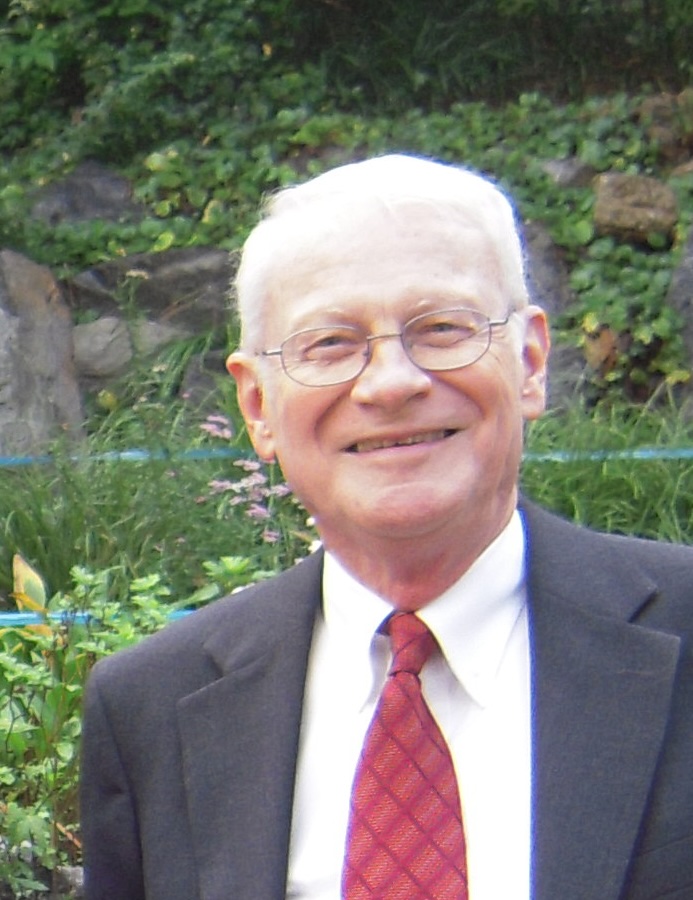
The author, Peter Kreeft, of the brief autobiography From Calvinist to Catholic—written, he says, not on his own initiative but at the behest of the publisher—has enjoyed a distinguished, decades-long career teaching philosophy at Boston College. A prolific author, he is widely regarded as a leading Roman Catholic philosopher and apologist.
Born in 1937, Kreeft was raised in a closely-knit ethnically Dutch community in the Paterson, New Jersey, area, where his family also belonged to one among several local confessionally orthodox Reformed congregations. His primary and secondary education was in Christian schools with a Calvinist basis.
Still appreciative today of his roots and with many positive memories from these early years, questions nevertheless began to form for Kreeft even as a child. Among these, why his and other Reformed denominations, if they were so right, were so small compared, for instance, to the Roman Catholic Church, and why Catholics, as he was taught, were so wrong.
Revealing is an incident he recounts on entering Saint Patrick’s Cathedral as a pre-teen during a visit to New York City:
I had never been in a cathedral before, and as soon as I stepped inside, I felt I had entered another universe. It was glorious, elaborate, mysterious, . . . wonderful, and otherworldly . . . It was extraordinarily extraordinary. I thought that this must be what Heaven looked like. It was literally miraculous, it was supernatural, it was not of this world. (37)
With questions and reservations that began forming in childhood and adolescence persisting, he went off to Calvin College. There sympathetic exposure by “my favorite teacher” (Harry Jellema) to the thought of Thomas Aquinas proved especially decisive. This encounter with Aquinas, the person he regards “as the most intelligent, clear, correct, complete, and comprehensive thinker who ever lived” (144), was pivotal in resolving his questions and leading to his eventual conversion to Catholicism soon after his graduation (whimsically, the young woman he asked to be the godmother for his baptism eventually became his wife after the Church granted them a necessary dispensation).
Of particular interest to some may be a meeting with Dr. Van Til not long after his conversion. This meeting was one among many conversations, primarily with his father, who, with his mother, was understandably distressed by his conversion. Of these, “a few of them [were] enlightening, including one with the great Calvinist theologian at Westminster Theological Seminary in Philadelphia, Cornelius Van Til, who was very gracious and intelligent, but not persuasive. Like Karl Barth, he was suspicious of my heroes: Socrates, Plato, Aristotle, Aquinas” (162). This confused affinity Kreeft finds between Barth and Van Til is an indication of his failure to see the profound difference between the two and his misunderstanding of the latter’s Calvinism.
Assessing this book fairly has proven to be challenging. Its title, as Kreeft himself says, is “a bit misleading,” for before becoming a Catholic, being a Calvinist was not all that significant for him: “I was a Christian first, an Evangelical second, a Protestant third, and a Calvinist fourth” (9). With this sort of prioritizing, a few pages later we read, “I am more Evangelical now as a Catholic than I was as an Evangelical Protestant” (13).
This co-opting of evangelical for and to include Catholicism—at odds with its usual and established contra-Catholic, Protestant sense covering various, though often diverging theological views and ecclesiastical developments stemming from the Reformation—is in effect a central strand of this autobiography. Throughout Kreeft is at pains to make clear that he sees his conversion not as abandoning false for true religion but as moving from a relatively impoverished and often erroneous Protestant, especially Calvinist, grasp of the truth of the gospel to its fuller and enriching embrace found only in the Catholic Church.
This raises a question for clarification, as obvious as it is pressing: How is Catholicism—not just at this or that point but with its doctrine, worship and piety, and outlook on life as a whole accepted, as Kreeft clearly does—“more Evangelical”? How are the following, for instance, truer to the truth of the gospel: the apostolicity of the Church understood as tied to and manifested in the supreme authority of the Pope, vested in personal papal succession, and entailing along with the infallibility of Scripture the infallibility of Church-sanctioned tradition (both to be received “with equal affection of piety and reverence,” Trent); the Eucharist of the Mass as a sacerdotal sacrifice; devotion to Mary; and purgatory? Kreeft advocates for these and other Catholic dogma and does so with undeniable facility and engaging winsomeness.
The case Kreeft makes for becoming Catholic and his rejection of Calvinism, while obviously of one piece, are distinct. My attention here will primarily be on his reasons for the latter rejection.
Kreeft does value Calvinism for its “strong affirmation of the absolute sovereignty of God” and “its most famous corollary,” predestination (179), and he says, “I love the beginning” of the Heidelberg Catechism, with the first question and the first sentence of its answer in mind (180). Still, the target of his most stringent criticisms of evangelical Protestantism is Calvinism.
Among these criticisms uppermost as much as any, apparently more than any other, is Calvin’s and subsequent Calvinism’s denial of free will. Preoccupation with exposing this denial with its perceived harmful implications and affirming the necessity of free will surfaces at a number of places throughout.
Before addressing this issue further, a general observation: It is disappointing how little interaction we find with the writings of Calvin and other important Calvinist and other Reformation sources. Kreeft, I assume, is capable of providing the kind of extensive and amply documented critique of Calvinism he has perhaps made elsewhere and which this autobiographical sketch is not intended to provide. However, with the contrarian agenda signaled by the book’s title, it is fair to expect that we would find more direct and detailed dealing with the writings of Calvin and other influential Calvinists and the Reformed confessions than Kreeft provides.
Toward the book’s close (172), listed are the names of two groups: those who in his interactions over the years are “my friends” on the one hand, and “worthy opponents” on the other. The latter group begins with the Greek Sophists and ends with Freud, Nietzsche, and Sartre. That Calvin or other important Calvinists (Bavinck, Warfield, for instance) are missing is noticeable. At any rate, the chapters on “The Five Points of Calvinism” and “Luther’s Three ‘Solas,’ ” for instance (not to mention here Calvin on free will, see below), leave me wondering about the adequacy of Kreeft’s understanding of the Calvinism he has rejected.
The denial of free will is “Calvinism’s great falsehood”; with this denial specifically in view, “Calvinism is a heresy” (182). Here forthrightly and one final time Kreeft levels a key charge made or implied a number of times earlier. His supporting reasoning, expressed repeatedly in various ways, is this: “If we are not free, we are not morally responsible;” “‘ought’ implies ‘can’.” In willing and doing what pleases him God does not expect or require of me more than I, freely seeking his enabling help, am of myself capable of willing and doing. Put formally, for Kreeft and the Catholic anthropology he represents, ability is the measure of responsibility or accountability.
It does not overstate to say that no more fundamental difference between Rome and the Reformation is at stake than here, a difference that is closely akin to and in its way as basic as the solas, particularly Christ alone, by grace alone, by faith alone.
The magisterial Reformers understood all too well that for sinners coram Deo, ability is not the measure of responsibility, that ought does not imply can. For them, the inescapable dilemma confronting sinners is that, faced as we are with the demands of God’s holy hatred of our sin, our accountability far exceeds our ability to satisfy or alleviate those demands.
The Reformation’s renewed recovery of the truth of the gospel—how it is that the gospel is the power of God for salvation to everyone who believes, the revelation of the saving righteousness of God in Christ received solely by faith—this recovery brought with it a deepened recognition of the abysmal depth of human sinfulness.
For the Reformers this gospel-truth was so liberating because they grasped that it alone was adequate for the salvation of sinners who, of themselves and left to themselves, are nothing less than “dead in [their] trespasses and sins” (Eph. 2:1). As such, inexcusably guilty and hopelessly corrupted, we are utterly helpless to do anything about our condition. They came to recognize that the inability of sinners is so total that more was needed than prevenient grace enabling a weakened but supposedly still freely functioning will, that the notion of the willing, grace-assisted, self-help use of the sacramental system of the Roman Church did not save but left sinners unreconciled to God.
They grasped that nothing less was adequate to change the deadness of the enslaved will of sinners than a work of grace that was nothing less than a work of resurrection—the regenerating, enlivening, and as such faith-creating work that God, rich in mercy and of great love, did in uniting them to Christ by faith to share in his righteousness and resurrection life (Eph. 2). With good reason Luther’s grasp of this truth and that the integrity of the gospel was at stake in maintaining it, prompted him to respond to Erasmus’s The Freedom of the Will with The Bondage of the Will.
William Barker (WTS, emeritus)—with thanks for his valuable input in preparing this review—has reminded me of Calvin’s treatment of free will in Book 2, Chapter 5 of his Institutes. A couple of things at least are noteworthy there. For one, the Catholic arguments for free will that Calvin effectively rebuts are in substance no different than the view maintained by Kreeft. Further and significantly, in doing so Calvin repeatedly finds support in Augustine. This at one point is Calvin’s summarizing statement:
Therefore we must keep in mind what we have elsewhere cited from Augustine: in vain, people busy themselves with finding any good of man’s own in his will. For any mixture of the power of free will that men strive to mingle with God’s grace is nothing but a corruption of grace. It is just as if one were to dilute wine with muddy, bitter water. (Section 15)
It would be difficult to be more pointed and unsparing.
At a number of places throughout, including his comments about free will, Kreeft stresses that grace perfects nature. This expresses a valid and important principle, but only as nature, grace, and their relationship are construed biblically. Here, as far as its anthropological and soteriological implications are concerned, specifically where fallen human will is in view, the principle is bound to read: Grace perfects nature only as in doing so it first renovates nature. The Westminster Shorter Catechism’s answer on effectual calling, for one, provides a succinct, biblically faithful statement of the comprehensive dimensions of this saving renewal:
Effectual calling is the work of God’s Spirit, whereby, convincing us of our sin and misery, enlightening our minds in the knowledge of Christ, and renewing our wills, he doth persuade and enable us to embrace Jesus Christ, freely offered to us in the gospel. (WSC 31)
On the issue of free will, Kreeft’s view is akin to Arminianism. He says as much in effect:
And the either/or of Heaven or Hell is equally certain and not up to our choice. But which of these two it is, is our choice [his emphasis]. As one Southern preacher not quite accurately but memorably put the dogma of free will, “God casts his vote for you and the Devil casts his vote against you and yours is the deciding vote.” (184–185)
Earlier I expressed my difficulty in assessing this book fairly. As already noted, Kreeft appreciates Calvinism’s emphasis on the absolute sovereignty of God and predestination, yet he denies double predestination. He loves the beginning of the Heidelberg Catechism, yet, though Romans 8:28, he says, “is my favorite verse in Scripture” (180), it’s not clear to me that beyond that first sentence he holds to the rest of the answer as it is to be believed and confessed. He clearly rejects much of the rest of the Heidelberg Catechism and the other Reformed confessions.
At the same time, however, pervasive throughout the book is an undeniable emphasis, however much it is sometimes obscured, that saving faith is “personally trusting in Christ” (75). In countering the objection that Catholicism teaches justification by works instead of justification by faith, which he denies, he recognizes that is the understanding all too many Catholics have. He relates the following (75):
I often ask my “Catholic” students at Boston College to answer questionnaires about themselves, and I sometimes include the question “If you died tonight and you met God and He asked you why He should admit you into Heaven, what would you answer?” And well over nine out of ten begin with the word “I” (“I did my best”, . . .“I am a kind person”, etc.). About half mention and appeal to God’s mercy, but fewer than one in ten even mention Christ.
In a video of the publisher’s interview about the book, he makes the arresting statement to the effect that when all Catholics become as Christ-centered as most Protestants, then all Protestants “will come home.”
No matter how this emphasis on the centrality of Christ and of saving faith as trusting Christ for salvation might be compromised and obscured by Roman Catholic error, I don’t want to be guilty of minimizing it. “My only hope,” he says, “my only plea, is Jesus Christ; it is not me” (187).
Still, a final reservation surfaces. The focus of the last chapter (“Prospective: What’s Next?”) is largely on purgatory, about which Kreeft, now facing death in his late 80s, is not only preoccupied with but also quite positive. The gist of his outlook is this: “Justification was finished by Christ alone on the Cross, but sanctification is an ongoing process that requires our free cooperation” (186; note again the accent on free will). He knows himself to be a sinner and recognizes that he will continue to be one until his death, so he is looking forward beyond death to purgatory to finish the process of sanctification and make him ready for heaven.
This outlook is at odds with official Roman Catholic dogma. For Rome, justification is clearly seen as based on sanctification, and thus as an ongoing process never complete in this life. This view, as articulated in the sixteenth century by the Council of Trent against the Reformation, persists. For instance, on justification the 1994 Catechism of the Catholic Church quotes for support this declaration of Trent: “Justification is not only the remission of sins, but also the sanctification and renewal of the interior man” (article 1989). For Rome, purgatory is for Christians who are not yet fully justified because they are not yet fully sanctified.
If in distinguishing justification and sanctification as he does, Kreeft is looking in faith to Christ’s finished work on the cross for his completed justification, then he is a happily inconsistent Catholic. But as he continues looking beyond this life to purgatory for sanctification, that sadly deprives him of the comfort of Scripture that “the souls of believers are at their death made perfect in holiness, and do immediately pass into glory” (WSC 37).
A recent review of this book, exemplary in its balance and making substantive criticisms I share (Kevin DeYoung in First Things), is entitled “Enjoyably Evangelical.” That may be a fair assessment; though at the same time it also has to be said that if Kreeft is to be regarded as an evangelical, it is not because, as he says, the Catholicism he has embraced has made him “more evangelical.”
The author is a retired OP minister and professor emeritus at Westminster Theological Seminary. New Horizons, August 2026.
New Horizons: August 2026
Also in this issue
by Danny E. Olinger
A Panoramic View: The Ninety-Second General Assembly
by Ken B. Montgomery
© 2026 The Orthodox Presbyterian Church


