
Ministries
Resources
Matt Smethurst
Reviewed by: Jeremiah Montgomery
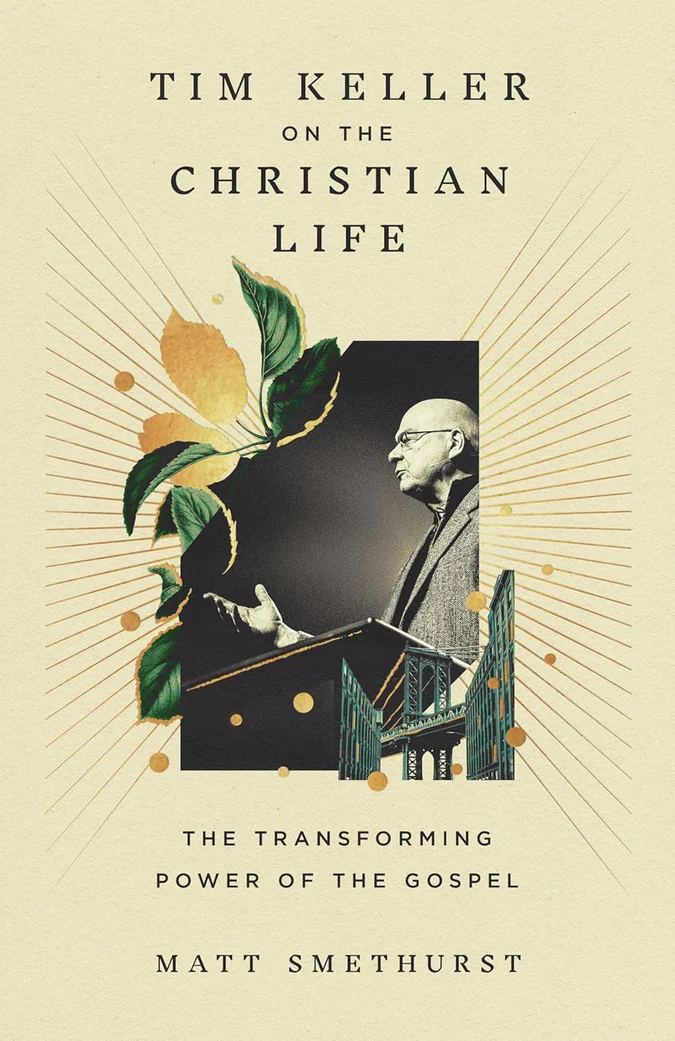
Tim Keller on the Christian Life: The Transforming Power of the Gospel, by Matt Smethurst. Crossway, 2025. Hardcover, 240 pages, $27.99. Reviewed by OP minister Jeremiah Montgomery.
Members and ministers of the OPC differ significantly in their assessment of the ministry of the late Tim Keller. Best known as the senior pastor of Redeemer Presbyterian Church (PCA) in New York City (1989–2017), Keller also cofounded two well-known parachurch organizations: Redeemer City to City, an inter-denominational church-planting organization, and the Gospel Coalition, an inter-denominational evangelical network.
The body of Keller’s work is substantial. More than 1,800 of his sermons are available online. Between 2008 and 2022, Keller also published more than two dozen books. These covered a wide range of subjects: besides popular commentaries on biblical books, Keller authored substantial works on apologetics, marriage, prayer, preaching, and suffering.
Keller was well-known for his “third way” approach to Christian ministry and cultural engagement. Willing to criticize relativism in the culture and legalism in the church, refusing to align with either liberal or conservative politics in society, and willing to work inter-denominationally while professing Presbyterian and Reformed convictions, Keller gathered both adherents and critics from many corners—including from within the OPC.
Matt Smethurst does not attempt to adjudicate the controversy surrounding this legacy. Whether church history or the final judgment will smile on Keller’s labors is beyond the scope of his short book. Rather, “the aim is more modest: to synthesize and distill Tim Keller’s best teaching on the Christian life” (5–6). In this he succeeds.
The eight chapters of Tim Keller on the Christian Life cover the major emphases of Keller’s teaching. The first chapter focuses on the centrality of Jesus Christ as the “One Hero” of all Scripture, and the second unpacks Keller’s nuanced and sophisticated teaching on idolatry as the deepest problem of the human heart. Subsequent chapters go on to summarize Keller’s teaching on grace, friendship, vocation, social action, prayer, and suffering.
Smethurst’s syntheses of Keller’s thought are both accessible and accurate. What really makes this work shine, however, is the way in which the author draws seamlessly not just from Keller’s published books, but also from numerous articles, interviews, and sermons. With a full fifty pages of endnotes, Smethurst does not simply distill Keller’s teaching; he documents his work so that readers interested to dig deeper can trace his sources.
Those looking for a critical engagement with Keller’s legacy will not find it here. However, those looking for a faithful index to the mainstream of Keller’s teaching will benefit from this slim volume. Smethurst does not attempt to conceal the fact that his resonance with Keller outweighs his disagreements. Nevertheless, the overall thrust of Tim Keller on the Christian Life is descriptive rather than prescriptive—and therefore makes this book valuable not just to Keller’s sympathizers, but even to his critics.
September 06, 2026
August 30, 2026
John Calvin’s Illustrated Institutes, Book 1
August 23, 2026
August 16, 2026
August 09, 2026
August 02, 2026
June 07, 2026
© 2026 The Orthodox Presbyterian Church


