
Ministries
Resources
Ryan M. McGraw
Reviewed by: Matthew J. Ezzell
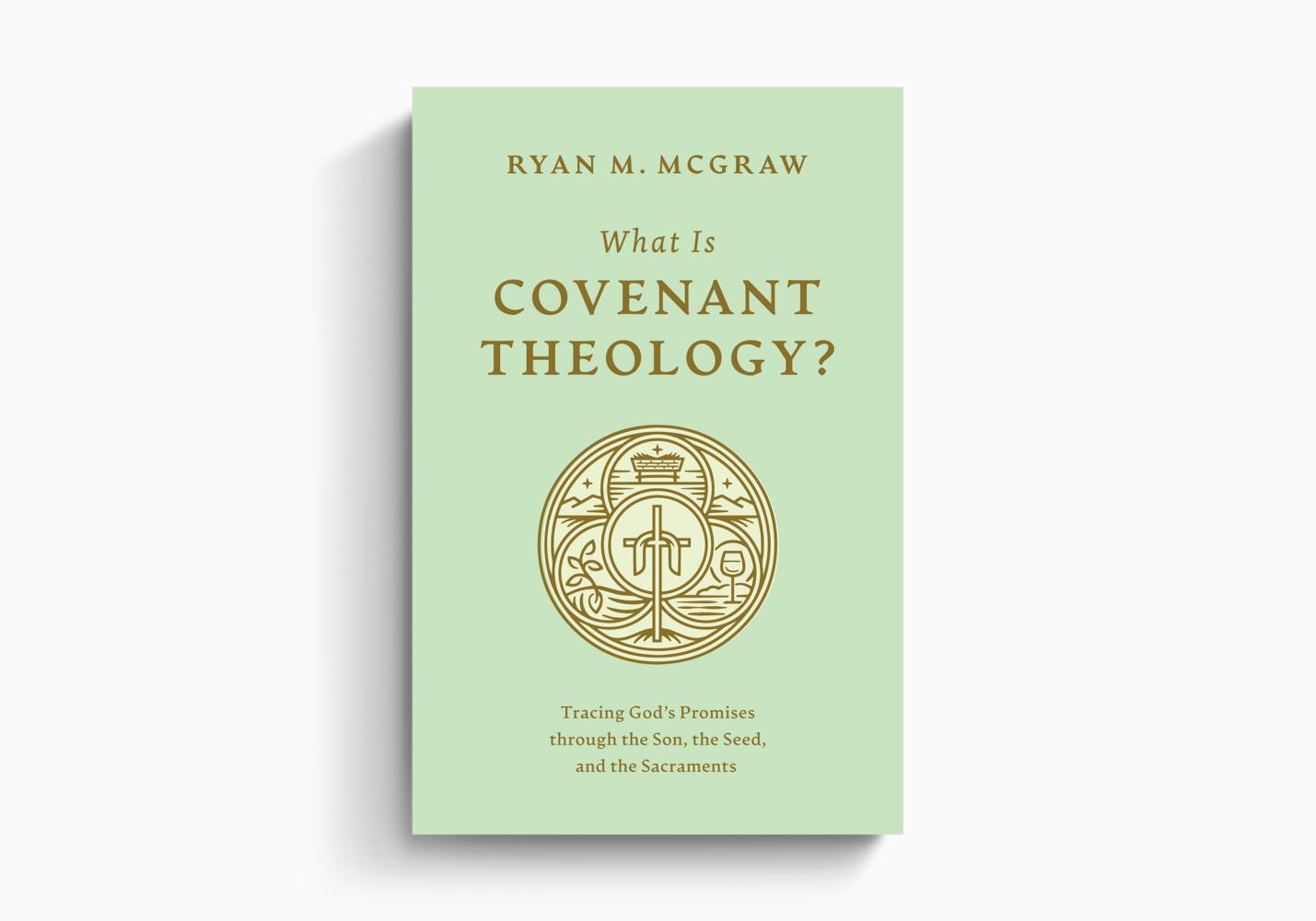
What Is Covenant Theology? Tracing God’s Promises through the Son, the Seed, and the Sacraments, by Ryan M. McGraw. Crossway, 2024. Paperback, 160 pages, $14.99. Reviewed by OP pastor Matthew J. Ezzell.
It’s been said, “Reformed theology is covenant theology.” That may be a slight overstatement, but nonetheless, it’s easy to see why someone might make that comment. Without some grasp of covenant theology, it is impossible to understand the Reformed view of salvation, the church, or the sacraments. Therefore, given the significance of covenant theology within the Reformed system of doctrine, Reformed Christians should at least acquaint themselves with the basics of covenant theology.
Yet, delving into the depths of covenant theology can be a formidable undertaking. The reasons for this are manifold: the sheer breadth of the subject, the intricacy of the topics involved, and the internal disagreements among covenant theologians. For all these reasons and more, those who hold covenant theology dear will be deeply appreciative of Ryan McGraw’s new book What Is Covenant Theology? This work endeavors to unpack covenant theology for the uninitiated by introducing them to its “basics and blessings.”
In his introduction, McGraw enumerates three chief blessings of covenant theology. First is the breathtaking unity of Scripture, second the glory of the triune God, and third the implications of covenant theology for Christian living. According to McGraw, these three blessings lead us to reflect on the basics of covenant theology. He argues that the basics of covenant theology revolve around Jesus Christ (the Son), his church (the Seed), and the sacraments (the Signs). The remainder of the book seeks to develop the themes introduced at the opening.
The first three chapters demonstrate how covenant theology illuminates the unity of Scripture for the believer by showing how the covenants of redemption, works, and grace provide us with a roadmap to navigate the Bible. McGraw then turns in chapter 4 to the second blessing of covenant theology, the glory of the triune God, explaining how covenant theology teaches us to treasure God.
In chapter 5, McGraw unfolds the last of the three “blessings,” the implications of covenant theology for Christian living. One particularly compelling aspect of this chapter is its focus on viewing the church, rather than the individual Christian, as central. By stressing the corporate over the individual, covenant theology calls us to pursue self-denial in the church, considering others more valuable than ourselves.
In the last chapter, McGraw raises several common questions related to covenant theology and seeks to provide quick, readable responses. Some of the questions are very practical, such as “Can someone still hold the gospel without covenant theology?” (97), and some are more technical, such as “Are the covenant of redemption and grace really distinct covenants?” (103) or “Did God ‘republish’ the covenant of works in the Mosaic covenant?” (117). Throughout this section, McGraw provides helpful and gracious answers.
Several aspects of this work stand out as particularly helpful. First, this work is theoretical and practical, in keeping with the best of the Reformed tradition. Thus, it helpfully blends systematic and biblical theology with rich Trinitarian doxology and practical applications. Second, it is historically rooted and confessionally grounded, which is helpful because it allows McGraw to avoid many contemporary debates and to present the reader with the mainstream of historic covenant theology. Third, it’s accessible, making this the ideal book for pastors to give out to new members and inquirers unfamiliar with covenant theology. The book is an excellent resource for anyone who wants an accessible yet substantial introduction to classic confessional covenant theology.
September 06, 2026
August 30, 2026
John Calvin’s Illustrated Institutes, Book 1
August 23, 2026
August 16, 2026
August 09, 2026
August 02, 2026
June 07, 2026
© 2026 The Orthodox Presbyterian Church


