
Ministries
Resources
Robert Letham
Reviewed by: Christian Repp
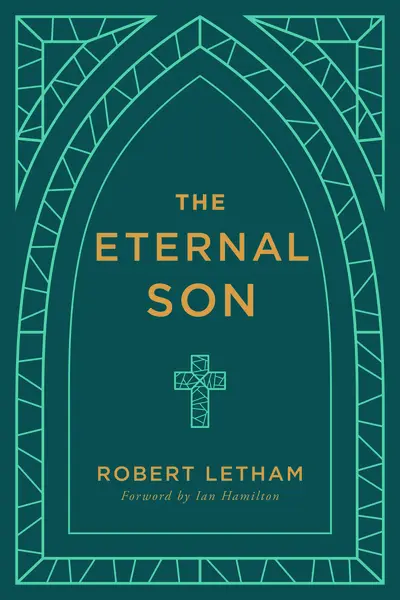
The Eternal Son, by Robert Letham. P&R, 2025. Paperback, 432 pages, $29.99. Reviewed by OP pastor Christian Repp.
Knowing who Christ is stands at the very heart of the Christian faith. For those who confess him as Lord, this is not a secondary or speculative question but a vital one. When the church deviates from orthodox teaching concerning the person of Christ, it rarely creates new errors so much as returns to old heresies in fresh forms. It is precisely here that Robert Letham’s The Eternal Son proves especially helpful. In this volume, Letham offers a careful and historically grounded account of the person of Christ, guiding the reader through the doctrinal contours that have safeguarded the church’s confession through the centuries.
This book is the second in a planned trilogy on the Father, Son, and Holy Spirit, complementing Letham’s earlier work, The Holy Trinity. Whereas his volume on the Spirit treated both person and work, The Eternal Son concentrates primarily on the Son’s person, with Christ’s work addressed only briefly toward the end. Letham begins with the Son’s eternal relation to the Father and the Spirit, emphasizing that the names “Father” and “Son” describe who God is in himself and are not dependent on creation or redemptive history. From there, he traces the historical development of Christology, following the church’s debates and controversies as it sought to speak faithfully about Christ as one person in two natures, without confusion, change, division, or separation.
One of the book’s greatest strengths is its historical approach. Letham carefully explains the rise of major heresies such as modalism and subordinationism and shows how they threatened the church’s confession of Christ. His treatment of the fourth-century Arian controversy and the resolutions reached at Nicaea and Constantinople makes clear that these councils were not abstract theological exercises but necessary responses to serious doctrinal dangers. Importantly, Letham demonstrates that christological debate did not end with Chalcedon. Questions concerning person, nature, action, and will continued for centuries, and differences between Eastern and Western theologians—often rooted in distinct emphases and the way key terms were understood—played a significant role in ongoing tensions. By leading the reader through these developments, Letham shows why careful attention to this history matters if the church is to avoid repeating the same errors in new forms.
The book becomes particularly engaging in its treatment of key theologians such as Cyril of Alexandria, Maximus the Confessor, John of Damascus, Aquinas, Luther, Melanchthon, Calvin, Peter Vermigli, and Beza. Cyril emerges as a central figure, especially in shaping the church’s articulation of the hypostatic union. In the later chapters, Letham addresses a range of significant christological questions, including Christ’s presence in the Lord’s Supper, kenotic Christology, and the peccability of Christ. His interaction with both Lutheran and Reformed positions on the Supper is especially helpful, bringing questions of the communication of attributes into sharper focus and showing how easily christological reflection can drift toward Nestorian tendencies if care is not taken.
One weakness of the book lies in its writing style. At times, Letham relies on extended quotations from primary sources followed by restatement, which can make certain sections feel dense and slow-moving. Nevertheless, the breadth of research and command of the tradition are undeniable, and the historical detail significantly deepens the reader’s understanding of how the church has confessed the Son across time.
The Eternal Son is a substantial and rewarding contribution to classical Christology. It reminds the reader that right belief about the person of Christ is not optional but essential, and that the church’s careful doctrinal formulations remain necessary for preserving the truth of the gospel. For pastors, students, and theologians seeking to think deeply and responsibly about Christ, this book calls for careful reading and reflection—tolle lege.
November 22, 2026
Christ of the Consummation, vol. 2
November 15, 2026
November 08, 2026
November 01, 2026
October 25, 2026
The Genevan Réveil in International Perspective
October 18, 2026
October 11, 2026
© 2026 The Orthodox Presbyterian Church


